


Page 73 - RESEARCH_WING_NAVY_JOURNAL_09-06-2022
P. 73
Sri Lanka Navy Journal  59


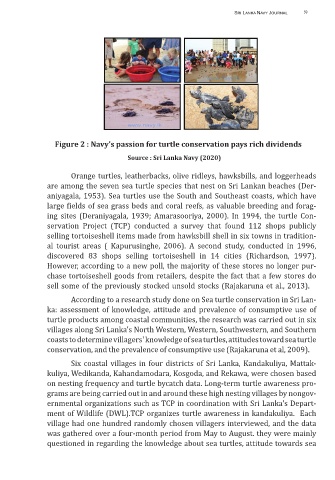
                  Figure 2 : Navy’s passion for turtle conservation pays rich dividends

                                         Source : Sri Lanka Navy (2020)


                      Orange turtles, leatherbacks, olive ridleys, hawksbills, and loggerheads
               are among the seven sea turtle species that nest on Sri Lankan beaches (Der-
               aniyagala, 1953). Sea turtles use the South and Southeast coasts, which have
               large fields of sea grass beds and coral reefs, as valuable breeding and forag-
               ing sites (Deraniyagala,  1939;  Amarasooriya,  2000).  In  1994,  the turtle  Con-
               servation Project (TCP)  conducted  a survey that found 112  shops  publicly
               selling tortoiseshell items made from hawksbill shell in six towns in tradition-
               al  tourist areas ( Kapurusinghe, 2006).  A second  study, conducted in 1996,
               discovered 83 shops  selling  tortoiseshell  in 14 cities (Richardson, 1997).
               However, according to a new poll, the majority of these stores no longer pur-
               chase tortoiseshell goods from retailers, despite the fact that a few stores do
               sell some of the previously stocked unsold stocks (Rajakaruna et al., 2013).

                      According to a research study done on Sea turtle conservation in Sri Lan-
               ka: assessment of knowledge, attitude and prevalence of consumptive use of
               turtle products among coastal communities, the research was carried out in six
               villages along Sri Lanka's North Western, Western, Southwestern, and Southern
               coasts to determine villagers' knowledge of sea turtles, attitudes toward sea turtle
               conservation, and the prevalence of consumptive use (Rajakaruna et al, 2009).

                      Six coastal villages in four districts of Sri Lanka, Kandakuliya, Mattak-
               kuliya, Wedikanda, Kahandamodara, Kosgoda, and Rekawa, were chosen based
               on nesting frequency and turtle bycatch data. Long-term turtle awareness pro-
               grams are being carried out in and around these high nesting villages by nongov-
               ernmental organizations such as TCP in coordination with Sri Lanka's Depart-
               ment of Wildlife (DWL).TCP organizes turtle awareness in kandakuliya.  Each
               village had one hundred randomly chosen villagers interviewed, and the data
               was gathered over a four-month period from May to August. they were mainly
               questioned in regarding the knowledge about sea turtles, attitude towards sea

