


Page 65 - journal_2020_july_uploaded_2022_mar_16
P. 65
Sri Lanka Navy Journal  52


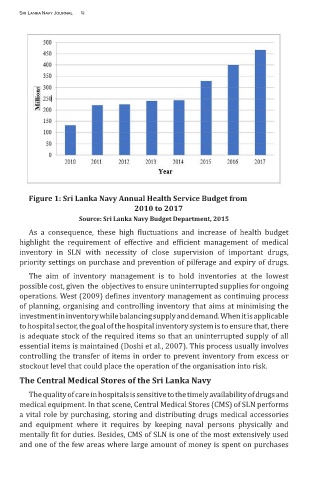
          Figure 1: Sri Lanka Navy Annual Health Service Budget from
                                         2010 to 2017
                         Source: Sri Lanka Navy Budget Department, 2015

          As  a  consequence,  these  high  fluctuations  and  increase  of  health  budget
       highlight  the  requirement  of  effective  and  efficient  management  of  medical
       inventory  in  SLN  with  necessity  of  close  supervision  of  important  drugs,
       priority settings on purchase and prevention of pilferage and expiry of drugs.
          The  aim  of  inventory  management  is  to  hold  inventories  at  the  lowest
       possible cost, given  the  objectives to ensure uninterrupted supplies for ongoing
       operations. West (2009) defines inventory management as continuing process
       of planning, organising and controlling inventory that aims at minimising the
       investment in inventory while balancing supply and demand. When it is applicable
       to hospital sector, the goal of the hospital inventory system is to ensure that, there
       is adequate stock of the required items so that an uninterrupted supply of all
       essential items is maintained (Doshi et al., 2007). This process usually involves
       controlling the transfer of items in order to prevent inventory from excess or
       stockout level that could place the operation of the organisation into risk.
       The Central Medical Stores of the Sri Lanka Navy


          The quality of care in hospitals is sensitive to the timely availability of drugs and
       medical equipment. In that scene, Central Medical Stores (CMS) of SLN performs
       a vital role by purchasing, storing and distributing drugs medical accessories
       and  equipment  where  it  requires  by  keeping  naval  persons  physically  and
       mentally fit for duties. Besides, CMS of SLN is one of the most extensively used
       and one of the few areas where large amount of money is spent on purchases

